
The Human Bottleneck: When Technology Outpaced Us
How our own limitations in speed, imagination, and biology are holding back the full potential of the technologies we’ve created.

Just a century or two ago, people were limited by the technologies they had. Now, everything’s different.
We’re the bottlenecks of every system. The technologies are so efficient and powerful that their possibilities are limited by our abilities to use them and our imagination.
Think about it for a moment. The rapid pace of technological evolution is no longer dictated by our ability to build better machines but by our capacity to understand and wield the power of those machines. We are the limitation, the weakest link in an increasingly complex and interconnected world.
The mere idea of this should send shockwaves through your mind. Technology is running ahead of us, waiting—no, begging—to be fully unleashed, and we are the ones holding it back. The thought alone is mind-boggling: we, the creators, have become the roadblock. But to truly appreciate how we arrived here, let’s take a closer look at how humans have been eclipsed by the very technology we once built to assist us.
From Tools to Masters
In the not-so-distant past, technological progress meant crafting tools to extend human capacity. The wheel, the printing press, electricity—all of these innovations were designed to amplify our physical or mental abilities. Each one was a reflection of human ingenuity and power, transforming the world around us.
But today, the tools we’ve created are no longer just extensions of our physical bodies. They’re becoming more than that. Computers, AI, quantum technologies, and bioengineering are evolving at a pace that makes previous eras of invention look like slow motion. These technologies don’t just enhance our muscles or increase productivity on an assembly line. They augment our cognitive abilities, predict our needs, and generate solutions to problems we haven’t even identified.
Yet, despite all this, we’re hitting a wall. That wall isn’t in the circuits or the algorithms. It’s in our minds. The problem isn’t technological anymore—it’s biological. It’s us. We have become the new limitation.
Think about it this way: we live in an age where the possibilities of artificial intelligence and machine learning are mind-blowingly vast. Machines can generate new pharmaceutical drugs, create art, write stories, analyze massive datasets, and run simulations at speeds that leave us in the dust. However, in nearly every one of these cases, the final decision still lies in human hands.
AI can suggest treatment options for cancer, but a doctor must decide whether to administer them. Quantum computers can explore solutions to mathematical problems we could never hope to solve, but a scientist has to interpret and apply those results. The potential is there for breakthroughs on a scale we can’t yet fathom, but human limitations are standing in the way.
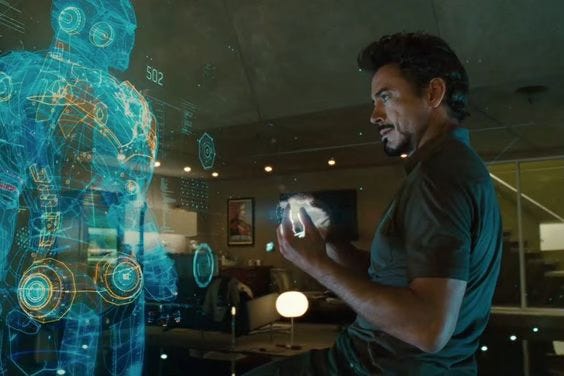
The Supercomputing Paradox: Human Speed vs Machine Speed
One of the most glaring examples of this human bottleneck is speed—specifically, the speed at which we can process and act upon information.
Supercomputers now perform calculations at rates incomprehensible to the human brain. In mere seconds, an AI can process data sets that would take a lifetime for a person to sift through. The human brain operates in slow, methodical ways, limited by our biological capacity for thought. Meanwhile, computers operate at light speed, constrained only by the limits of electricity and algorithms. We’ve reached a point where the bottleneck isn't about building faster machines—it’s about humans trying to keep up.
Consider the financial markets. Algorithmic trading systems execute trades in microseconds, reacting to shifts in the market faster than a human trader could ever dream of. But despite this speed, these systems are often subject to oversight by people who simply can’t match the velocity at which these machines operate. Traders are still required to make final calls, adjusting parameters based on old-fashioned intuition or experience—both of which lag behind machine capabilities.
The result? Bottleneck. As traders mull over data and debate strategies, the market moves, and opportunities evaporate. Machines could be making these decisions, reacting in real-time, seizing every chance—but they’re not allowed to because of our biological need for control.
It’s an uncomfortable thought, isn’t it? That we, the apex of evolution, are now outpaced by the very tools we’ve created. Even our best decision-makers—CEOs, scientists, and world leaders—are mere plodders in comparison to the raw computational force at their fingertips. While a computer can calculate outcomes from millions of variables in seconds, we need hours, days, or even years to come to conclusions that might have been rendered irrelevant by the next wave of progress.
Imagination: The Real Limiting Factor
But speed isn’t the only issue. It’s not just that machines move faster—it’s that they can think in ways we’re not even capable of imagining.
One of the most insidious bottlenecks is the limitation of human imagination. We think we’re so advanced, so creative—but in reality, our mental models are still primitive, shaped by eons of evolutionary pressures that no longer apply. While a computer algorithm can churn out thousands of possible solutions to a problem, most humans are still stuck in linear thinking, constrained by the past and their own experiences.
Let’s look at AI again. Machines are now generating art, writing stories, and composing music. This isn’t just some gimmick—it’s a demonstration of a fundamental shift in how creativity works. A machine doesn’t get bogged down by fear of failure, creative blocks, or a lack of inspiration. It doesn’t have the psychological hang-ups that plague us when we attempt to create. It just produces relentlessly, infinitely. And in doing so, it has opened doors to creative possibilities that we’ve only begun to explore.
However, even here, we see the limits of human imagination. Many still regard AI-generated art or music as "less than" because it doesn't fit within the traditional boundaries of human creativity. Our inability to imagine new ways of appreciating creativity stifles the true potential of this technology. And the same can be said for how we approach innovation in fields like science, medicine, and industry.
Our inability to even imagine what’s possible—our inability to think *big*—holds us back more than we’d like to admit.
The Weight of Human Bias: The Invisible Chains
Even more restricting than our imagination is our bias. We walk around thinking that we’re rational, objective beings, yet we’re constantly making decisions colored by deep-rooted prejudices, fears, and preferences. These biases act like invisible chains, restricting the possibilities that technology could offer.
Let’s take an example from AI. Right now, AI systems are capable of making far more accurate decisions than humans in many fields—whether it’s predicting criminal recidivism, determining the best candidate for a job, or analyzing medical symptoms. Yet, time and again, we’ve seen humans push back against the idea of machines making these kinds of decisions because we don’t trust them.
Why? Not because the machines aren’t capable. No, they are. The problem is we *don’t trust* them because they don’t operate within our own flawed, biased frameworks. We’re scared of them precisely because they’re too good—because their decisions aren’t constrained by the same emotions, beliefs, or experiences that influence our choices.
In this way, our biases act as yet another bottleneck. We fear what we don’t understand, so we cling to what feels familiar. As long as we continue to prioritize our own judgment over that of technology, we’re going to keep slowing down progress in areas where machines could do better.
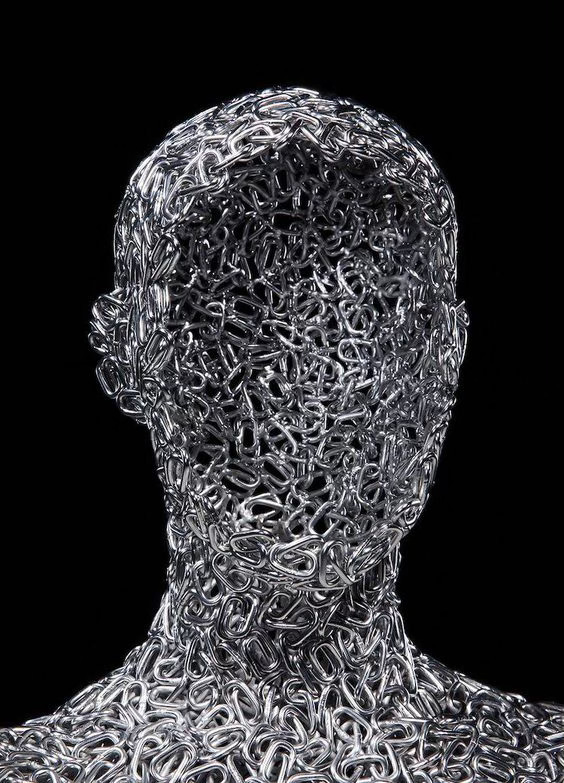
The Biological Bottleneck: Our Own Brains Are Holding Us Back
This leads us to the most fundamental bottleneck of all: our biology.
Let’s face it—we’re not built for this world. Evolution shaped us for survival in a very different environment. Our ancestors lived in small tribes, faced immediate physical dangers, and made decisions based on short-term survival. Fast-forward to today, and we’re living in a world of constant, rapid change, bombarded with an overwhelming amount of information. But our brains haven’t evolved to deal with this new reality.
This is what’s called the "old brain" problem. Our brains are wired for scarcity, for short-term decision-making, and for processing limited amounts of data. When faced with overwhelming complexity, our response is often to shut down or revert to simple, binary thinking. Fight or flight. Yes or no. Right or wrong.
But technology doesn’t work that way. The systems we’ve built operate in a world of nuance, probabilities, and infinite possibilities. They don’t have the same biological baggage that we do, and as a result, they can explore possibilities in ways we simply can’t.
Nowhere is this more apparent than in our relationship with change. Humans are fundamentally resistant to change—especially rapid change. It triggers stress, anxiety, and a desire to retreat into the familiar. This biological resistance is one of the greatest bottlenecks to technological progress. Even when the tools are there, we hesitate to use them because our bodies and minds are overwhelmed by the rate of transformation.
This is where biohacking comes in. We’re starting to explore ways to alter our own biology, to hack into the systems of the brain and body that hold us back. Whether it’s through nootropics, genetic modification, or neural implants, we’re searching for ways to break free from the limitations of the human body and mind. If we can find a way to enhance our brain’s ability to process information, adapt to change, and make decisions faster, we can start to catch up with the machines we’ve built.
Human Control: The Final Obstacle
But here’s the paradox: we’re holding on to control even as we recognize our own inadequacy. Even in situations where AI and machines could outperform us by every measure, we refuse to fully cede control. Our fear of losing autonomy prevents us from fully embracing the technologies that could revolutionize our world.
Self-driving cars, for instance, have the potential to save millions of lives by eliminating human error from the equation. Yet, adoption is slow. Why? Because people don’t want to give up control. We’d rather trust our own flawed, fallible selves behind the wheel than a machine that can react faster and more accurately in every situation.
This is a metaphor for the broader relationship between humans and technology. We’ve created something that has surpassed us in many ways, but we can’t let go. We can’t accept that maybe—just maybe—machines can do it better than we can. As long as we continue to insist on being at the center of decision-making, we’ll keep being the bottleneck.
The Future: Will We Break Free?
So, what does the future hold? Will we continue to slow down technological progress, or will we find ways to remove ourselves as the bottleneck?
The path forward is unclear. Some argue that human augmentation—whether through biohacking, AI integration, or genetic engineering—is the only way to keep up with the pace of technological change. Others suggest that we need to learn to trust machines more, ceding control in areas where they outperform us.
Either way, one thing is certain: we can’t afford to ignore the fact that we are the limiting factor. Technology has already evolved beyond us. The question is, will we evolve to meet it?
We stand at the edge of a new era, one in which machines will continue to surpass human capabilities at an accelerating rate. The only question that remains is whether we’re ready to get out of the way and let them.
Because if we don’t? We’ll remain stuck as the bottleneck, limiting the very future we once dreamed of creating, or what’s more fearful, we’ll become slaves of the techno-advanced species of life we’ve made ourselves.
Join a tribe of like-minded rebels, outliers, and thinkers who are done playing by society’s rules. We are about creating our own reality—one built on strength, resilience, and radical self-reliance.